
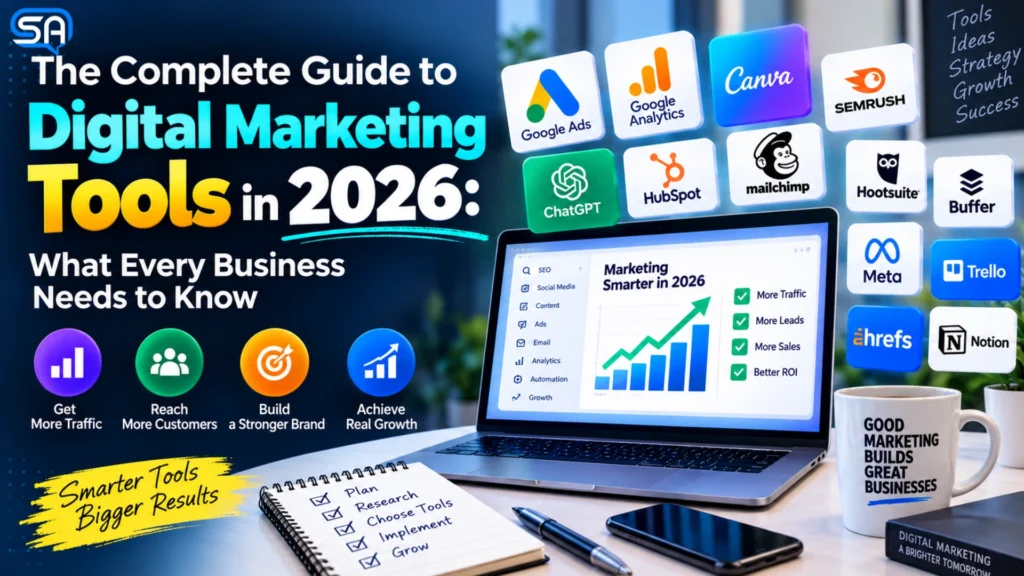
Running a business in 2026 without the right digital marketing tools is like trying to build a house with just a hammer. You might get somewhere eventually, but you’ll waste time, money, and energy you didn’t need to spend. Whether you’re a solo entrepreneur, a growing startup, or an established brand trying to stay competitive, the right set of digital marketing tools can be the difference between guessing and knowing, between hoping for results and actually driving them.
In this guide, we’ll walk through the essential categories of digital marketing tools, explain why each one matters, and help you understand how to build a toolkit that actually moves the needle for your business.
Why Digital Marketing Tools Matter More Than Ever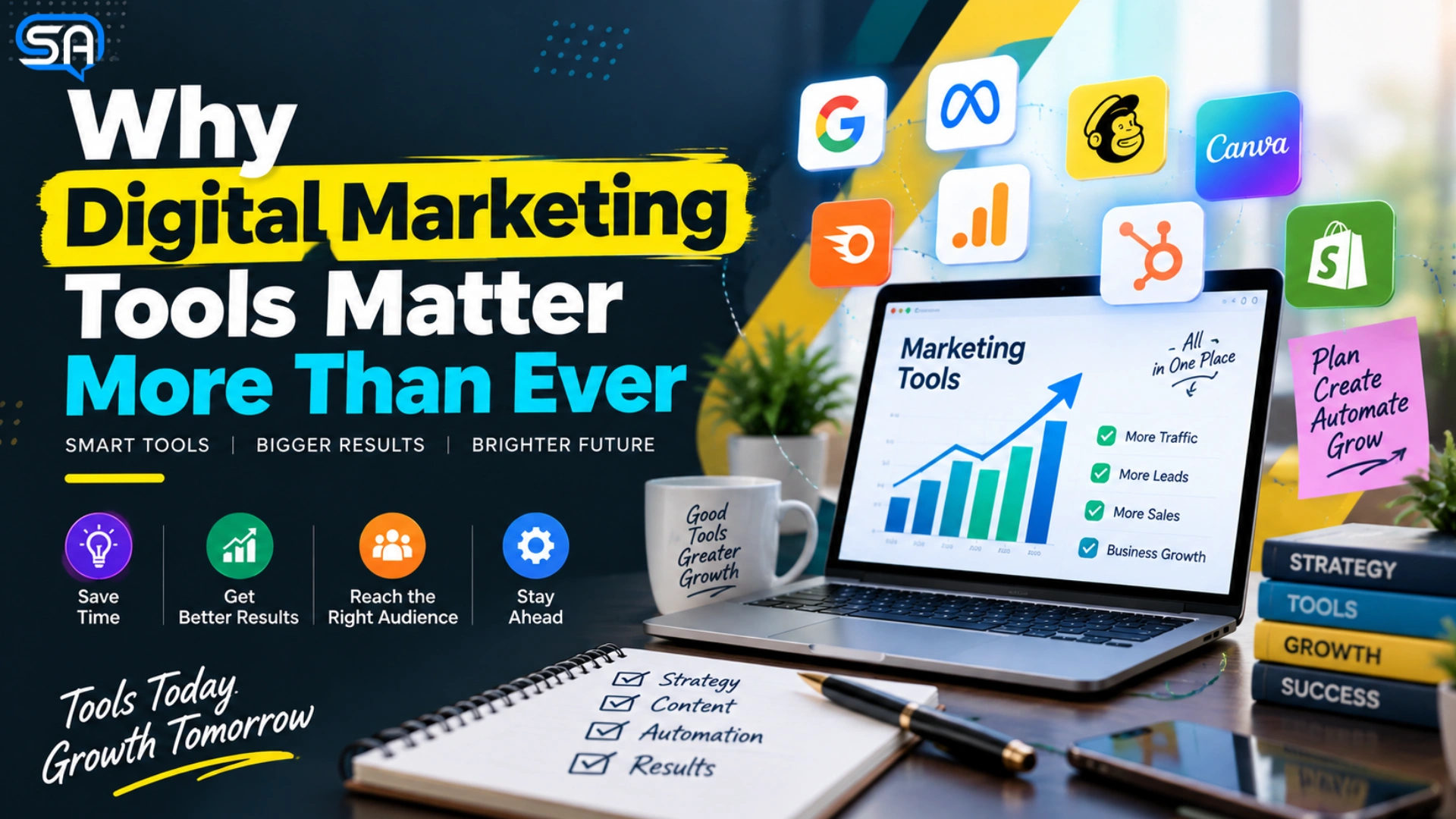
A few years ago, digital marketing was relatively simple. You posted on social media, sent the occasional email newsletter, and maybe ran a few Google Ads. Today, the landscape is far more complex. Consumers interact with brands across a dozen different touchpoints, algorithms change constantly, and competition for attention has never been fiercer.
This is exactly where digital marketing tools come in. They help you cut through the noise, automate repetitive tasks, and make decisions based on real data rather than gut feeling. Without the right digital marketing tools, you’re essentially flying blind — spending money on campaigns without knowing what’s working, publishing content without understanding what resonates, and missing opportunities that your competitors are capturing.
The businesses that grow fastest today aren’t necessarily the ones with the biggest budgets. They’re the ones using digital marketing tools intelligently to work smarter, not just harder.
SEO Tools: The Foundation of Visibility
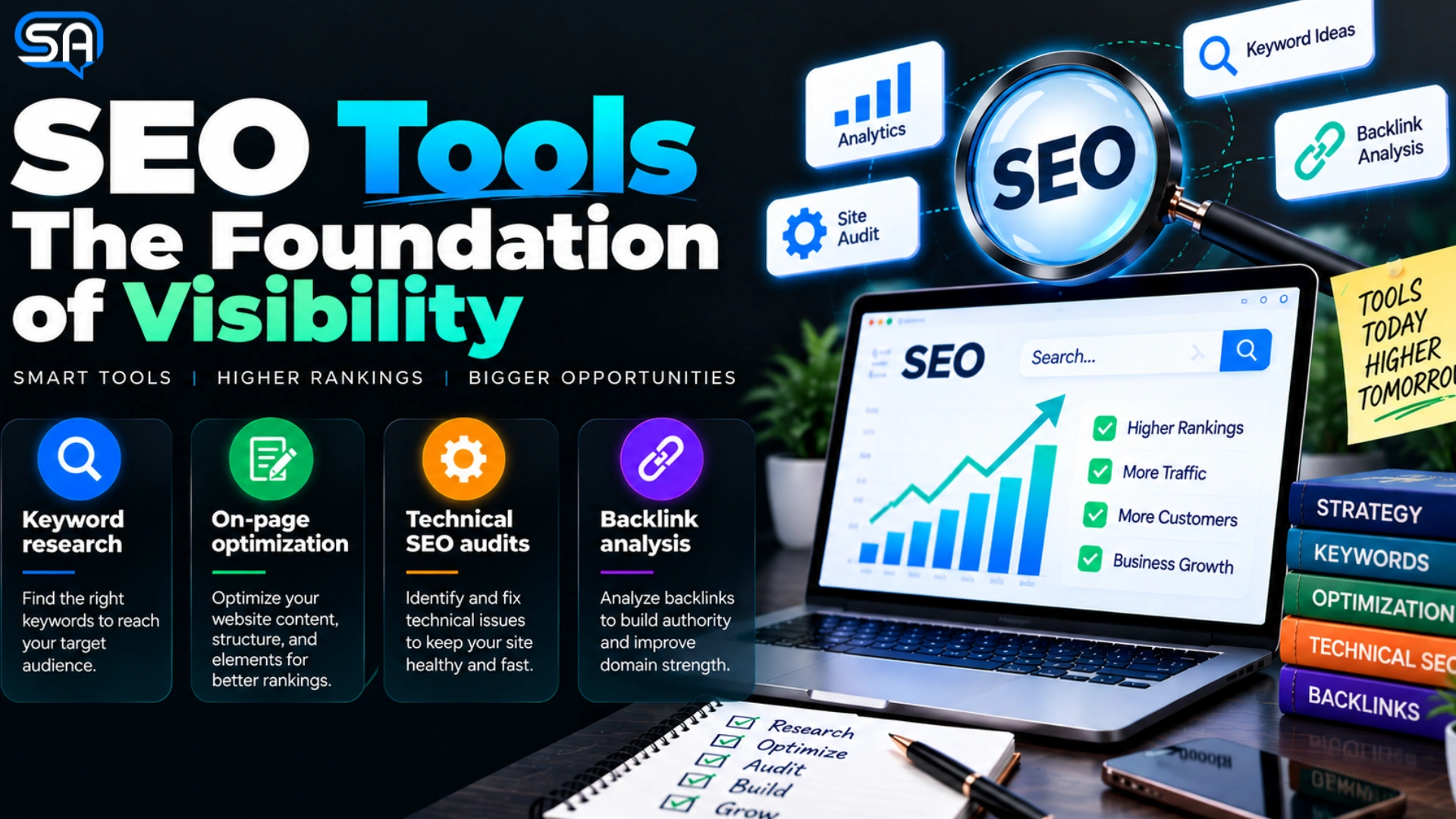
Search engine optimization remains one of the highest-ROI digital marketing tools categories because organic traffic keeps working for you long after you’ve stopped actively promoting a page. Good SEO tools help with:
Keyword research: Understanding what your audience is actually searching for, including search volume, competition, and intent behind each query.
On-page optimization: Making sure your title tags, meta descriptions, headers, and content structure are aligned with what search engines reward.
Technical SEO audits: Identifying issues like slow page speed, broken links, duplicate content, and poor mobile responsiveness that quietly kill your rankings.
Backlink analysis: Tracking who links to you, who links to your competitors, and where new link-building opportunities exist.
Popular tools in this category include Ahrefs, SEMrush, and Google Search Console. Even if you’re working with a limited budget, Google Search Console is free and gives you a wealth of information about how your site is actually performing in search results.
Social Media Management Tools

If your brand is active on Instagram, Facebook, LinkedIn, or any other platform, you already know how time-consuming it can be to plan, create, schedule, and analyze content manually across multiple channels. This is where social media-focused digital marketing tools become indispensable.
These tools typically allow you to:
Schedule posts in advance across multiple platforms from a single dashboard
Monitor mentions, comments, and messages in one place
Analyze engagement metrics to understand what content performs best
Work together with teammates on content approvals and calendars.
Tools like Buffer, Hootsuite, and Later have become staples for businesses that want consistency without burning out their team managing five different apps every day. The best social media management tools also give you insight into optimal posting times, audience demographics, and competitor benchmarking.
Content Creation Tools

Content is still king, but creating high-quality content consistently is one of the biggest challenges businesses face. This is a category of digital marketing tools that has evolved dramatically in recent years, especially with the rise of AI-assisted content generation.
Content creation tools generally fall into a few buckets:
Writing and editing tools: Grammarly, Hemingway Editor, and AI writing assistants that help refine tone, clarity, and grammar
Graphic design tools: Canva and Adobe Express make it possible for non-designers to produce professional-looking graphics for social posts, blogs, and ads
Video editing tools: With short-form video dominating engagement across platforms, tools like CapCut and Adobe Premiere Rush have become essential for producing Reels, Shorts, and TikToks efficiently.
The right combination of content creation tools lets a small team produce output that used to require an entire in-house creative department.
Email Marketing Platforms
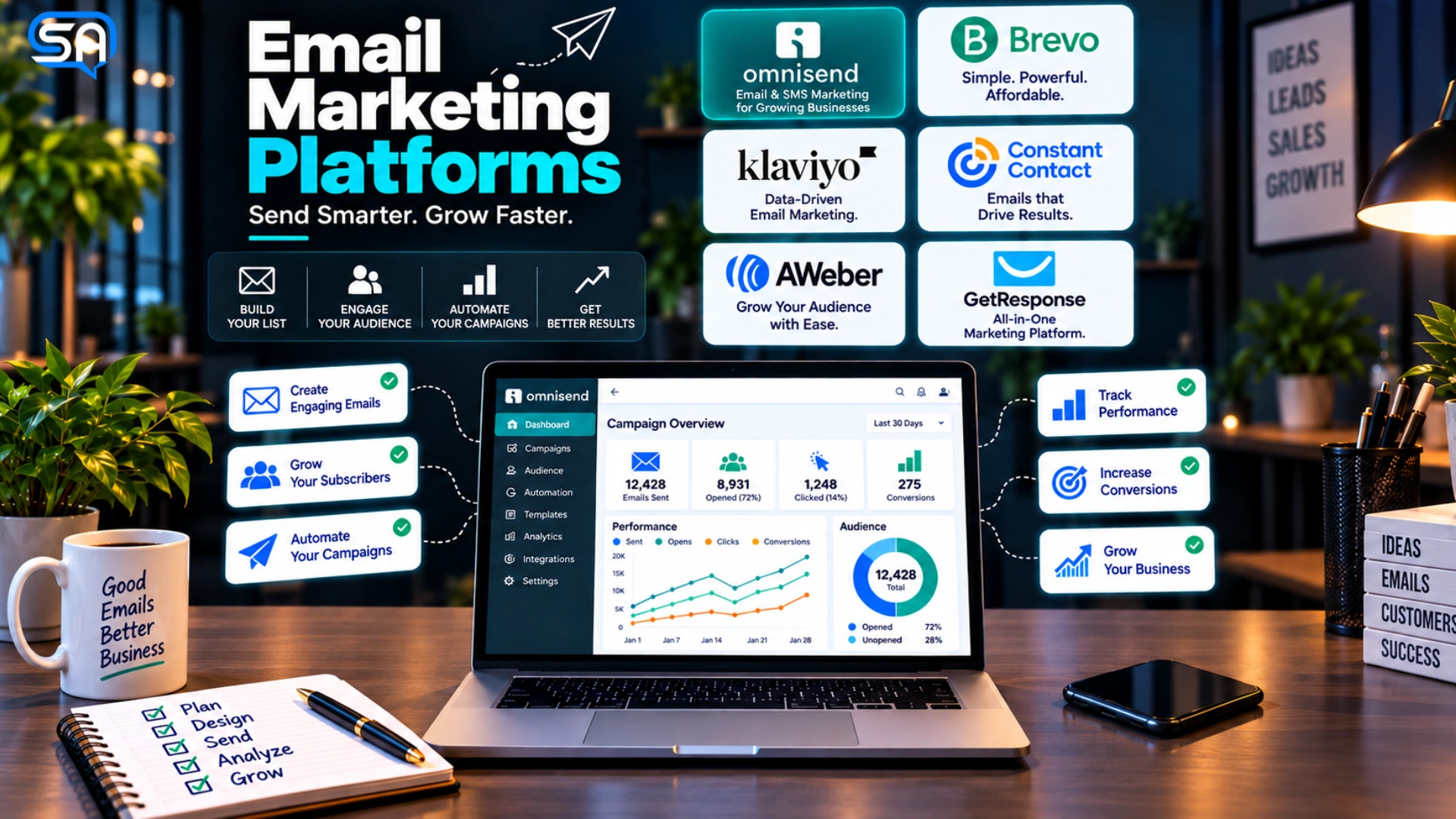
Despite predictions over the years that email marketing would become obsolete, it remains one of the highest-converting digital marketing tools available, often outperforming social media in terms of direct ROI. Email marketing platforms let you:
Build and segment subscriber lists based on behavior and preferences
Design newsletters and promotional campaigns without needing to code
Set up automated sequences that nurture leads without manual effort
Track open rates, click-through rates, and conversions to refine future campaigns
Platforms like Mailchimp, Klaviyo, and ConvertKit dominate this space, each with strengths depending on whether you’re running an e-commerce store, a service business, or a content-driven brand. Automation is where email marketing tools really shine — a well-built welcome sequence or abandoned cart email can generate revenue on autopilot.
Website and E-Commerce Platforms

Your website is often the first real interaction a potential customer has with your brand, which makes website-building and e-commerce tools a core part of any digital marketing toolkit. A clean, modern, mobile-responsive site isn’t optional anymore — it’s the baseline expectation.
Key considerations when choosing website and e-commerce tools include
Page load speed and mobile optimization
Ease of updating content without needing a developer
Integration with marketing tools, inventory management systems, and payment gateways
Integrated analytics to monitor visitor behavior and conversion routes
Platforms like Shopify, WordPress with WooCommerce, and Webflow each serve different needs, but all of them exist to make sure your website isn’t just a digital brochure — it’s an active part of your sales funnel.
Google Ads and Paid Advertising Tools
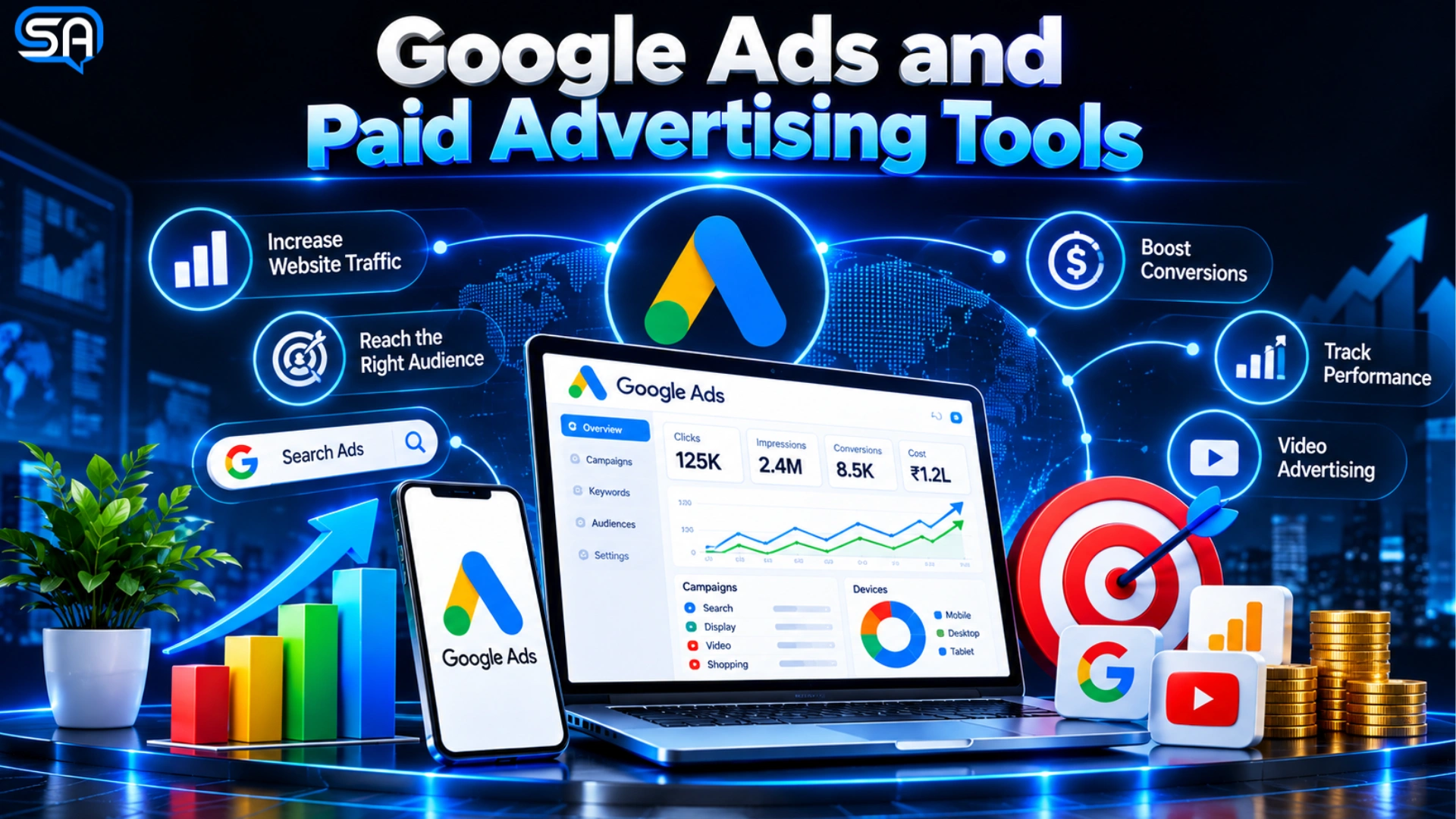
Organic strategies take time to build momentum, which is why paid advertising remains a critical piece of the digital marketing tools puzzle for businesses that need faster results. Google Ads, along with paid social platforms, allow you to put your brand directly in front of people actively searching for what you offer.
Effective use of these tools involves:
Keyword bidding strategies that balance cost with conversion potential
A/B testing ad creative and landing pages
Audience targeting based on demographics, interests, and behavior
Ongoing campaign management to reduce wasted ad spend
The businesses that get the most out of Google Ads treat it as an ongoing optimization process, not a “set it and forget it” campaign. Regular monitoring and adjustment is what separates profitable campaigns from money pits.
Analytics and Reporting Tools
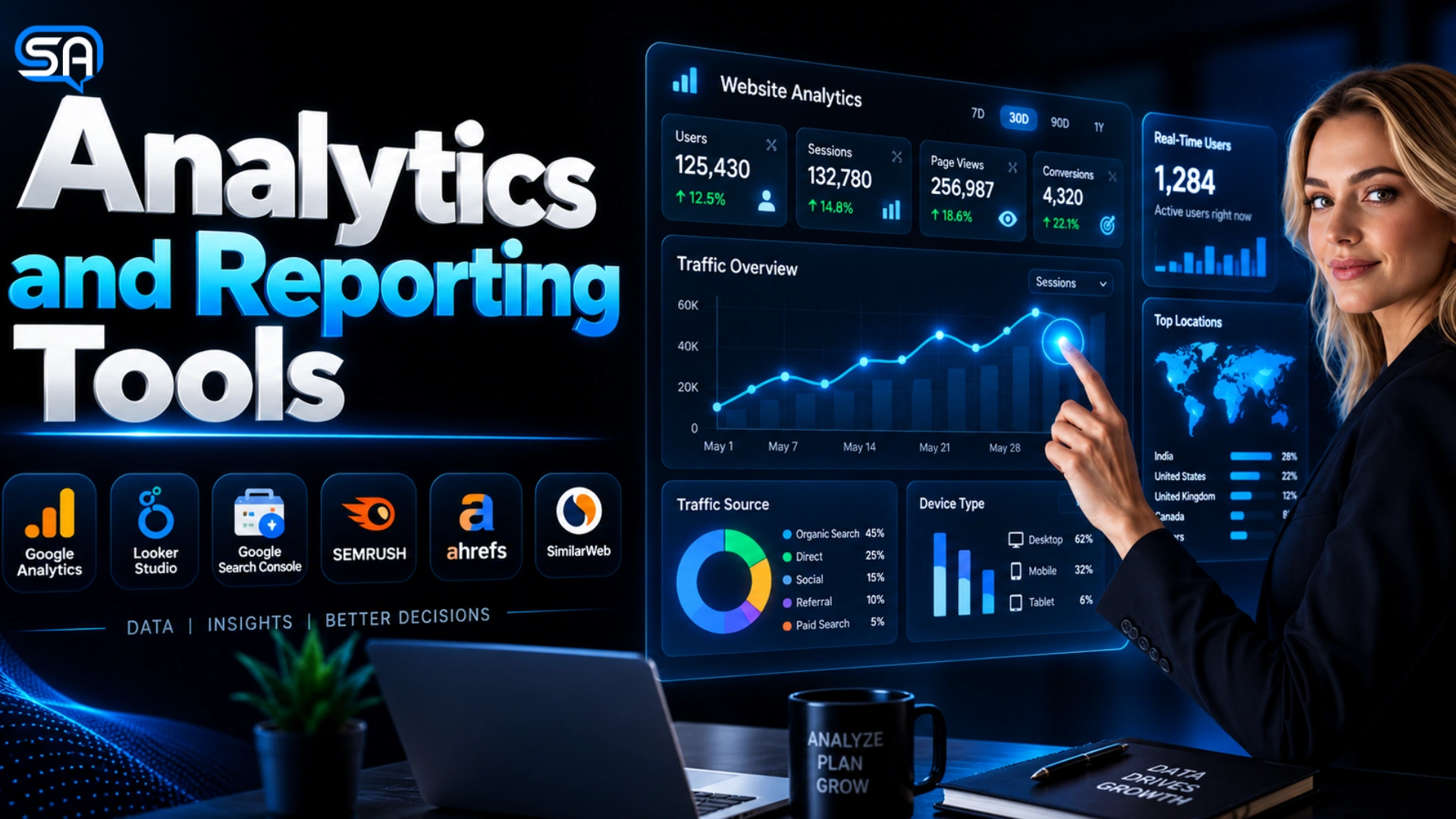
You can’t improve what you don’t measure. Analytics tools are the backbone that ties all your other digital marketing tools together, giving you visibility into what’s actually working.
The industry standard for monitoring website traffic, user behavior, and conversion routes is still Google Analytics. Combined with tools like Google Tag Manager and heatmap software such as Hotjar, you can build a complete picture of how visitors interact with your site — where they click, where they drop off, and what ultimately drives them to convert.
Without proper analytics tools, marketing decisions become guesswork. With them, every dollar you spend can be traced back to a measurable outcome.https://prabhatsoft.in/digital-marketing-complete-guide-for-2026/
Affiliate Marketing Tools

For businesses looking to expand reach without upfront ad spend, affiliate marketing tools offer a performance-based alternative. These platforms help you recruit affiliates, track referral traffic, manage commission structures, and ensure accurate attribution for every sale generated through partner links.
This category of digital marketing tools is particularly valuable for e-commerce brands and subscription-based businesses, where a network of motivated partners can drive consistent, scalable growth.
Where to Begin When Creating Your Digital Marketing Toolkit
It’s simple to be overwhelmed by the abundance of alternatives.Here’s a practical approach to building out your stack of digital marketing tools without wasting money on things you don’t need yet:
Start with measurement. Before investing in anything else, set up basic analytics so you can track what’s happening on your website.Optimizing something you cannot see is impossible.Prioritize based on your biggest bottleneck. If you have traffic but low conversions, focus on website and landing page tools. If you have a great product but no visibility, prioritize SEO and paid advertising tools.
Don’t buy every tool at once. Many businesses fall into the trap of subscribing to a dozen platforms, using none of them well. It’s far more effective to master two or three core digital marketing tools than to dabble in ten.
Consider working with professionals.The effectiveness of digital marketing tools depends on the strategy used to implement them. A skilled team that understands SEO, social media, content, email, and paid advertising can help you avoid costly trial and error, especially in the early stages of growth.
Final Thoughts

The digital marketing landscape will keep evolving, and new tools will keep emerging. But the fundamentals stay the same: understand your audience, measure what matters, and use technology to work more efficiently rather than just more. Whether you’re just getting started or looking to refine an existing strategy, investing time in understanding and selecting the right digital marketing tools for your business is one of the smartest moves you can make.
If you’re not sure where to start, a good rule of thumb is this — pick one tool per core function (SEO, social, content, email, website, ads, analytics), get comfortable with it, and expand from there. Digital marketing tools should simplify your work, not add to your overwhelm. Choose wisely, use them consistently, and let the data guide your next move. blogs https://sainulabideen.in/blogs/
FREQUENTLY ASKED QUESTIONS
.n 2026 which digital marketing techniques will be crucial?
SEO tools, social media management platforms, content production tools, analytics platforms, email marketing software, CRM systems, advertising platforms, and AI-powered marketing tools are examples of essential tool
.What are digital marketing tools?
Digital marketing tools are software platforms that help businesses plan, create, manage, automate, and measure online marketing activities such as SEO, social media, email marketing, advertising, and analytics
. How does artificial intelligence fit into digital marketing?
AI may be used by marketers to improve campaign workflows, automate time-consuming tasks, customize customer experiences, produce content concepts, assess marketing data, and create marketing assets
. Can digital marketing tools boost sales for businesses?
Indeed. Businesses can reach relevant audiences, create leads, enhance customer communication, optimize campaigns, monitor conversions, and pinpoint marketing initiatives that boost revenue with the correct tools.
How will digital marketing tools develop in 2026 and beyond?
Workflows driven by AI, automation, personalization, linked data, predictive analytics, enhanced measurement, and integrated marketing platforms will probably be the main topics of the future. Businesses will be better equipped to adapt if they integrate technology with a solid strategy and human ingenuity.